
Disclosure: This post contains affiliate links. If you purchase through these links, I may earn a small commission at no extra cost to you. Thank you for supporting my blog! 💕
The humble staircase is often the most overlooked architectural element in a home. For many, it is simply a functional necessity, a way to move from point A to point B. However, in the world of interior design, the staircase is viewed as the ‘spine’ of the property. When this spine is dull, dated, or dark, it can drag down the entire energy of your living space. This is where the magic of a modern staircase renovation comes into play, specifically one that leverages the power of biophilic design. Biophilia is the innate human instinct to connect with nature, and bringing this concept into your home’s transition points can turn a mundane walk upstairs into a restorative journey.
Imagine stepping away from cold, synthetic carpets and sterile drywall toward a space that breathes. A biophilic masterpiece doesn’t just look better; it improves air quality, reduces stress, and creates a sense of harmony between the built environment and the natural world. The transformation from a dull, uninspired set of steps to a breathtaking focal point relies on a single, fundamental change: the integration of living elements and natural textures. By shifting our perspective on what a staircase can be, we unlock the potential for a home that feels more alive and connected.
In this guide, we will explore how a focused staircase renovation can serve as the catalyst for a total home evolution. We will dive deep into the materials, the lighting, and the ‘one change’, the addition of living greenery, that elevates a standard renovation into a biophilic masterpiece. Whether you are dealing with a cramped hallway or a grand foyer, the principles of natural design are universal, offering a timeless aesthetic that transcends fleeting trends.
The Science and Soul of Biophilic Design
To understand why a beautiful staircase renovation is so impactful, we must first understand the philosophy behind biophilia. Coined by Edward O. Wilson, the term describes our biological need to be around life and lifelike processes. In modern architecture, this translates to the use of natural light, ventilation, organic shapes, and, most importantly, vegetation. When we incorporate these elements into our homes, we aren’t just decorating; we are nourishing our psychological well-being.
A beautiful staircase renovation that utilizes biophilic principles focuses on ‘prospect and refuge.’ This design concept creates a sense of safety (refuge) while allowing for a clear view of the surrounding environment (prospect). Stairs are uniquely positioned to offer both. By opening up sightlines and using transparent or organic balustrades, you create a sense of openness. This shift from a boxed-in, dark staircase to an airy, light-filled structure is the first step in the biophilic journey.
Furthermore, the use of fractal patterns, patterns that repeat at different scales, common in trees and snowflakes, can be subtly integrated into the design of the stairs. Whether it is through the grain of the wood or the intricate metalwork of a custom railing, these patterns are proven to reduce heart rates and lower stress levels. By choosing a beautiful staircase renovation that honors these natural geometries, you transform a high-traffic area into a zone of tranquility. The goal is to move away from the ‘machine for living’ and toward a ‘sanctuary for thriving.’
The One Change: Integrating Living Greenery
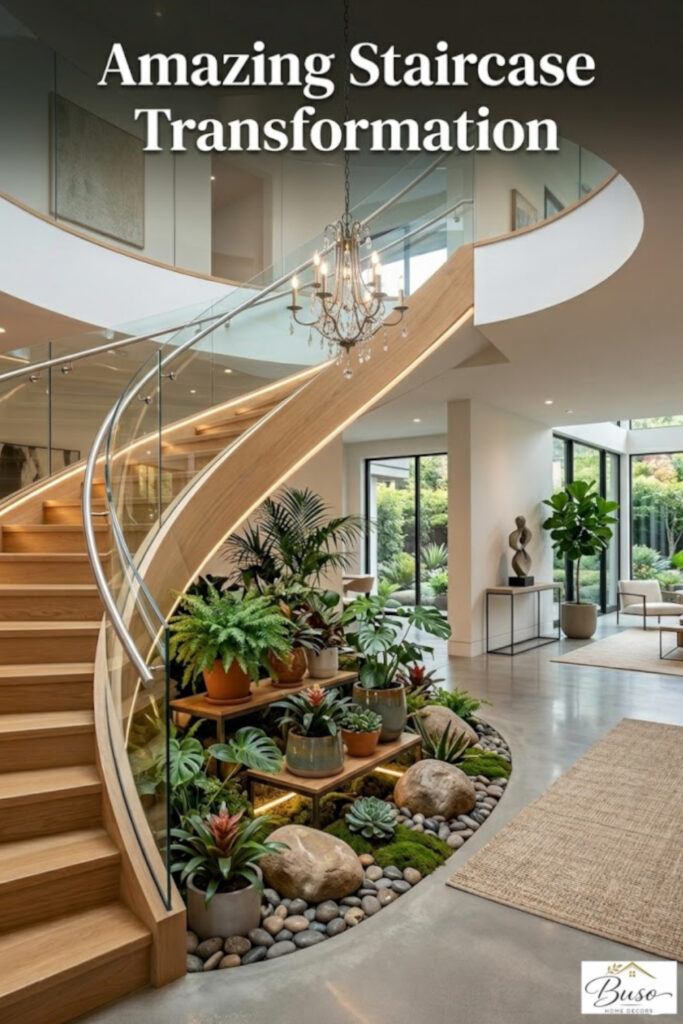
The ‘one change’ that truly converts a dull staircase into a masterpiece is the inclusion of living plants. While many homeowners focus on paint or carpet, these staircase renovation projects reach their peak when they treat greenery as a structural component rather than an afterthought. There are several ways to achieve this. One of the most popular methods is the installation of a living ‘green wall’ alongside the stairs. A vertical garden creates a lush backdrop that changes with the seasons, providing a dynamic visual experience every time you ascend.
If a full green wall feels too ambitious, consider integrated planters built directly into the stair structure itself. Imagine the bottom three steps widening into low-profile stone basins filled with snake plants or peace lilies. These staircase renovation ideas bridge the gap between furniture and nature. The presence of plants does more than just look good; they act as natural air purifiers, stripping toxins from the air and releasing fresh oxygen exactly where the air often stagnates in narrow stairwells.
For those with limited space, ‘trailing’ plants offer a stunning alternative. Allowing pothos or ivy to cascade down the side of the banister or from a high ledge creates a ‘curtain of green’ effect. This mimics the feeling of walking through a forest canopy. When people see these staircase renovation results, they are often struck by how much warmer and more inviting the home feels. The greenery softens the hard angles of the steps and creates a seamless flow between different levels of the home, making the transition feel natural rather than mechanical.
Materials Matter: Texture and Sensory Experience
A successful staircase renovation must appeal to more than just the eyes; it must appeal to the sense of touch and sound as well. Biophilic design emphasizes the use of ‘honest’ materials, substances that are what they appear to be. This means moving away from laminate and plastic and toward solid wood, stone, and metal. The feel of cold stone underfoot in the summer or the warmth of reclaimed oak in the winter provides a grounding sensory experience that connects us to the earth.
When planning your staircase renovation, consider the grain of the wood. Using wide planks of white oak or walnut allows the natural beauty of the timber to take center stage. Each knot and swirl in the wood tells a story of the tree’s growth, adding a layer of history and character to your home. Stone treads, on the other hand, offer a sense of permanence and strength. Slate or basalt can provide a sophisticated, earthy vibe that works perfectly in contemporary biophilic homes.
Don’t forget the tactile nature of the handrail. A handrail is something you touch every single day. Instead of a standard, painted rail, why not choose a raw, hand-carved wooden rail or even a leather-wrapped banister? These textures invite interaction. In a comprehensive staircase renovation, every detail should serve the goal of bringing the outdoors in. Even the sound of the stairs matters. Solid materials reduce the hollow, ‘clacking’ sound of footsteps, replacing it with a solid, dampened thud that contributes to a quieter, more peaceful home environment.
The Role of Light and Shadow in Nature
Light is perhaps the most critical element in biophilic design. In nature, light is never static; it changes, flickers, and dances. To create the best staircase renovation, you must move away from static, harsh overhead lighting. Instead, focus on maximizing natural light and using artificial light to mimic the sun’s patterns. If your staircase is against an exterior wall, consider installing a large window or a series of skylights directly above. This floods the area with Vitamin D and provides the necessary energy for your integrated plants to thrive.
When natural light is limited, the best staircase renovation will utilize ‘layered’ lighting. This involves a combination of ambient, task, and accent lights. LED strips tucked under the lip of each tread can create a soft glow that guides the way at night, mimicking the look of moonlight on a path. Wall-mounted sconces can cast dappled shadows, reminiscent of sunlight filtering through leaves. This interplay of light and shadow adds depth and drama to the staircase, making it a masterpiece of visual storytelling.
Furthermore, smart lighting systems can now be programmed to follow the human circadian rhythm. During the day, the lights can emit a cool, blue-toned white to keep you alert, transitioning to a warm, amber glow in the evening to prepare your body for sleep. By integrating this technology into the best staircase renovation, you are aligning your home’s internal clock with the natural world, further enhancing the biophilic benefits of the space.
Practical Considerations for Your Transformation
Embarking on a staircase renovation requires careful planning to ensure the result is both beautiful and safe. Structural integrity is the first priority. If you are removing walls to create an ‘open’ staircase, you must consult with a structural engineer to ensure your home remains supported. Similarly, if you are adding heavy stone treads or large integrated planters, the underlying stringers may need reinforcement. A professional staircase renovation balances aesthetic desires with engineering realities.
Maintenance is another key factor to consider, especially when living plants are involved. For the ‘one change’ to remain a masterpiece, your greenery needs to stay healthy. This might mean installing a hidden irrigation system for a green wall or choosing low-maintenance species that thrive in the specific light conditions of your hallway. Choosing the right materials during your staircase renovation will also impact long-term care. Unsealed wood might look beautiful, but it can be prone to staining. Selecting high-quality, eco-friendly finishes will protect your investment while keeping the home’s air clean.
Finally, consider the flow of the home. The staircase should not be an island; it should be a bridge. The materials and colors used in your staircase renovation should echo those used in the surrounding rooms. If you have hardwood floors in the living room, carry that wood onto the treads. If you have stone accents in the kitchen, incorporate stone into the base of the stairs. This creates a cohesive narrative that makes the biophilic masterpiece feel like an organic part of the house rather than an architectural after-thought.
Frequently Asked Questions
What is the best wood for a biophilic staircase renovation?
Oaks and walnuts are popular for their prominent grain patterns and durability. Reclaimed wood is even better for biophilic design as it adds a layer of history and sustainability to the project.
How do I maintain plants in a staircase area with low light?
Choose ‘low-light’ champions like ZZ plants, Sansevieria (Snake Plants), or Pothos. You can also supplement natural light with specialized full-spectrum LED grow lights that can be hidden within the architectural details.
Is a biophilic staircase renovation more expensive?
While high-quality natural materials and living walls can increase the initial cost, the long-term value added to the home’s air quality, aesthetic appeal, and overall property value often outweighs the investment.
Can I DIY a biophilic staircase transformation?
Small changes like adding plants and changing the runner can be DIY projects. However, structural changes or integrated lighting and irrigation usually require professional contractors to ensure safety and longevity.
Final Thoughts
Transforming a dull, forgotten part of your home into a biophilic masterpiece is one of the most rewarding interior design journeys you can take. By focusing on the ‘one change’, the infusion of life and natural elements, you create a space that does more than just connect floors; it connects people to their environment. A staircase renovation is not merely about aesthetics; it is an investment in your mental and physical health. The combination of natural light, living plants, and organic textures creates a sensory-rich experience that calms the mind and invigorates the soul.
As we have explored, a perfect staircase renovation requires a balance of vision and practicality. From the science of fractal patterns to the engineering of integrated planters, every decision should lead back to the core principles of biophilia. When you step onto those stairs, you should feel a sense of peace and a connection to the world outside. By choosing the right materials and embracing the power of nature, you turn the mundane act of climbing stairs into a daily highlight. Your home deserves a spine that is as vibrant and alive as you are, and a perfect staircase renovation is the key to unlocking that potential.
📌 Found this helpful? Save this pin to your Pinterest boards so you can refer back to it later!