
Disclosure: This post contains affiliate links. If you purchase through these links, I may earn a small commission at no extra cost to you. Thank you for supporting my blog! 💕
The space beneath a staircase is often an overlooked architectural vacuum, a dusty corner relegated to storage bins or forgotten vacuum cleaners. However, the modern interior design movement has re-imagined this nook as a prime location for indoor greenery. Transforming this dead space into a thriving botanical sanctuary can dramatically elevate your home’s aesthetic and air quality. Yet, the transition from a Pinterest-inspired dream to a living, breathing reality is fraught with challenges. Many homeowners jump into the project with enthusiasm, only to find their plants wilting or their floorboards rotting within months. Understanding common staircase garden mistakes is the first step toward creating a sustainable indoor oasis that doesn’t just look good on day one but flourishes for years to come.
Creating a garden in such a confined and unique environment requires a blend of horticultural knowledge and structural engineering awareness. Unlike a traditional backyard or even a sunny windowsill, the under-stairs area presents a specific set of microclimatic conditions that can be hostile to many popular plant species. From light deprivation to poor airflow, the constraints are real and formidable. If you are planning to utilize this architectural feature for your green thumb ambitions, you must be wary of the pitfalls that have ruined countless other DIY projects. In this comprehensive guide, we will dissect the fundamental design errors that lead to failure and provide you with the professional insight needed to avoid these garden mistakes and build a masterpiece of interior landscaping.
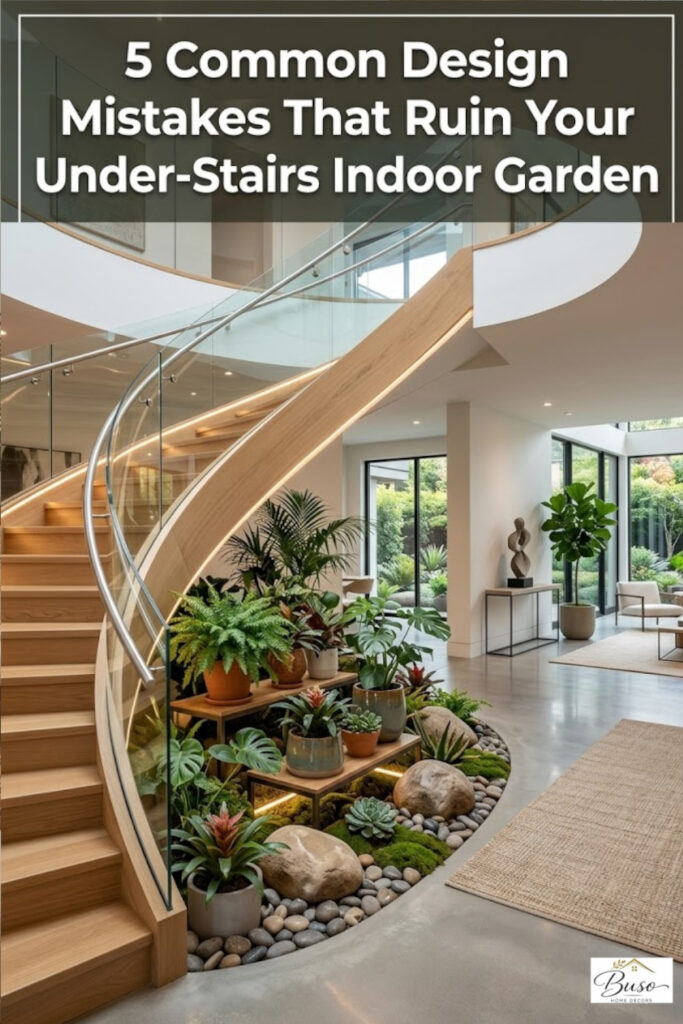
The Fatal Flaw of Inadequate Light Source Planning
One of the most frequent errors made by novice indoor gardeners is the assumption that ‘low light’ means ‘no light.’ The area under a staircase is naturally one of the darkest spots in any home, shielded by the treads above and often tucked away from windows. Relying solely on ambient room light is one of these garden mistakes that leads to spindly, leggy growth and eventual plant death. Most tropical plants used in indoor landscaping require a specific range of Photosynthetically Active Radiation (PAR) to produce food. When plants are deprived of this, they enter a state of stress, dropping leaves and losing their vibrant color.
To avoid the best garden mistakes regarding lighting, you must integrate dedicated grow lights into your staircase design. Modern LED grow lights come in various forms, from discreet strips tucked under the stair treads to stylish pendant lights that serve as design features themselves. These lights should provide a full spectrum of light, mimicking the sun’s natural output. It is also vital to consider the duration of light exposure; using a smart timer to ensure 12 to 14 hours of consistent light can make the difference between a dying patch of dirt and a lush jungle. Furthermore, the distance between the light source and the foliage must be carefully calculated. If the light is too far, it becomes ineffective; if it is too close, it can scorch delicate leaves. By prioritizing a robust lighting plan, you circumvent the most common reason for indoor garden failure and set the stage for a vibrant display.
Neglecting Waterproofing and Drainage Infrastructure
Designing an indoor garden is as much about protecting your home’s structure as it is about keeping plants alive. A catastrophic error that falls under the umbrella of staircase garden mistakes is failing to install a proper moisture barrier. When you water plants, moisture inevitably finds its way out of pots through drainage holes or evaporation. Without a high-quality waterproofing membrane, this water can seep into the floorboards, the staircase stringers, and even the drywall. This leads to wood rot, mold growth, and structural instability, a high price to pay for a few ferns.
To prevent these beautiful garden mistakes, you should treat the under-stairs area like a wet room. This involves applying a waterproof liquid membrane or using heavy-duty pond liners before any soil or decorative rocks are added. Additionally, the drainage system must be flawlessly executed. Using ‘cachepots’ (outer decorative pots without holes) can help, but for a truly integrated garden bed, you should install a tray system or a sloped floor that directs excess water toward a hidden collection point or a drain. Many designers opt for a layer of expanded clay pebbles or gravel at the bottom of the planting area to act as a reservoir, but even this requires careful management to prevent the water from becoming stagnant and foul-smelling. Proper air circulation is the final piece of the puzzle here; installing a small, silent fan can help evaporate excess moisture and prevent the fungal diseases that often plague damp, enclosed spaces.
Poor Plant Selection Based on Aesthetics Alone
It is tempting to choose plants based solely on how they look in a magazine, but this is one of the most common staircase garden mistakes. Not every plant is suited for the life of an under-stairs inhabitant. For instance, high-light succulents or Mediterranean herbs will struggle and die in the humid, shaded environment of an indoor garden, regardless of how much artificial light you provide. Choosing the wrong species leads to a cycle of constant replacement and frustration. Instead of forcing a plant to adapt to an environment it hates, you should select ‘right plant, right place.’
To achieve the perfect garden mistakes avoidance, focus on shade-tolerant species that thrive in stable indoor temperatures. Snake plants (Sansevieria), ZZ plants (Zamioculcas zamiifolia), and various species of Philodendron or Pothos are excellent candidates because they are resilient and can handle the unique microclimate. You must also consider the growth rate and eventual size of the plants. A fast-growing Monstera deliciosa might look cute in a small corner today, but within a year, it could be pushing against the underside of the stairs, obstructing walkways and looking cluttered. By researching the mature height and spread of each plant, you ensure the garden remains proportional and manageable. Consider the texture and color of the foliage to create a layered effect, using darker greens in the back and variegated or lighter-colored leaves in the foreground to create an illusion of depth in a shallow space.
The Oversight of Accessibility and Maintenance Access
A garden that is difficult to reach is a garden that will be neglected. When planning the layout, many people make the mistake of packing the area so tightly with plants and decorative stones that they cannot reach the ones in the back. This is another example of staircase garden mistakes that result in localized infestations of pests like spider mites or mealybugs, which go unnoticed until the entire garden is compromised. If you have to crawl on your hands and knees or move heavy furniture every time you need to water or prune, you will eventually stop doing it.
To circumvent these garden mistakes, you must design for human ergonomics as much as for plant health. Incorporate ‘stepping stones’ or small pathways within the garden bed if the space is deep. Alternatively, use a tiered shelving system or rolling planters that can be easily accessed. Think about how you will get water to the area; is there a nearby faucet, or will you be carrying heavy watering cans across your living room carpet? Installing a discreet drip irrigation system can solve the watering issue, but you still need physical access for cleaning leaves and checking for pests. Remember that dust is a major enemy of indoor plants, as it clogs their pores; easy access allows you to regularly wipe down foliage to keep them breathing. A well-designed garden accounts for the ‘work’ phase of gardening, ensuring that the joy of maintenance isn’t overshadowed by the difficulty of the task.
Disregarding Scale, Proportion, and Design Cohesion
An under-stairs garden should feel like an integrated part of your architecture, not a random collection of pots shoved into a corner. A frequent entry in the list of staircase garden mistakes is the lack of a cohesive design theme. Using a mismatched variety of pots in different colors, materials, and styles can create visual clutter that detracts from the beauty of the plants. Furthermore, failing to account for the scale of the staircase itself can make the garden look either underwhelming or suffocating. A massive staircase needs a garden with some height and bold foliage, whereas a delicate, open-tread modern staircase might benefit from more minimalist, airy plantings.
To create beautiful garden mistakes-free environments, start with a limited color palette for your containers and hardscaping materials. If your home has a modern industrial vibe, consider concrete or matte black planters. For a more organic, Scandinavian look, use terracotta or light wood. Pay attention to the ‘negative space.’ You don’t need to fill every square inch with soil; using decorative river rocks, sand, or even a small water feature can provide the eye with a place to rest and make the greenery pop. Lighting also plays a role in design; use accent lighting to cast dramatic shadows of the leaves onto the walls, adding a sense of luxury and drama. By treating the garden as a living piece of furniture or an art installation, you ensure it complements your interior design rather than competing with it. Balance the heights, vary the leaf shapes, and ensure the overall composition follows the golden ratio for a truly professional finish.
Frequently Asked Questions
What are the best low-light plants for a staircase garden?
How often should I water my indoor garden under the stairs?
Can I use real soil or should I use a potting mix?
Do I need a drainage tray for my under-stairs garden?
Final Thoughts
Building an under-stairs garden is a rewarding endeavor that can transform the heart of your home, but success lies in the details. By being aware of these common staircase garden mistakes, you can build a system that supports life rather than one that struggles against it. From the technical requirements of full-spectrum lighting and rigorous waterproofing to the artistic considerations of scale and plant selection, every element must work in harmony.
Avoid the best garden mistakes by planning your drainage and access routes before you ever buy your first plant. Remember that a garden is a living, evolving entity; it requires patience, observation, and a willingness to adjust as the plants grow. By avoiding the pitfalls outlined in this guide, you will create a stunning, sustainable indoor sanctuary that enhances your home’s value and your own well-being. Start with a solid foundation, choose your species wisely, and your under-stairs garden will become the most talked-about feature of your home.
📌 Found this helpful? Save this pin to your Pinterest boards so you can refer back to it later!