

Disclosure: This post contains affiliate links. If you purchase through these links, I may earn a small commission at no extra cost to you. Thank you for supporting my blog! 💕
As the frost of winter begins to melt away and the first hints of spring sun peek through the windows, our homes naturally crave a sense of renewal. One of the most effective ways to breathe life into your living space without a full renovation is through the art of styling surfaces. This season, the “organic modern” aesthetic remains a frontrunner for those seeking a balance between clean, contemporary lines and the grounding influence of the natural world. Achieving the perfect organic modern shelf decor requires a delicate touch, it is about finding the harmony between “less is more” and the rich textures found in nature. This guide will walk you through the nuances of this design style, ensuring your shelving reflects a sense of calm, sophistication, and seasonal freshness.
The organic modern look is characterized by a neutral color palette, the use of raw materials like light wood and stone, and a commitment to uncluttered spaces. Unlike traditional minimalism, which can sometimes feel cold, organic modernism invites warmth through tactile elements. When we apply this to shelving, whether they are floating shelves in a kitchen, a massive built-in library in a living room, or a small nook in the entryway, the goal is to create a curated collection that looks effortless yet intentional. By focusing on the five secrets outlined in this post, you can transform your home into a sanctuary that celebrates the transition into spring while maintaining a timeless appeal. Let us dive deep into the specific techniques that make this style so captivating and approachable for any homeowner.
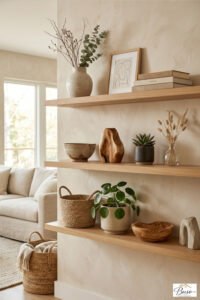
1. Prioritize Raw and Tactile Materials
The foundation of any successful organic modern shelf decor arrangement begins with the materials themselves. To achieve that signature look, you must move away from mass-produced plastic or highly polished metals and embrace the imperfections of the natural world. Think of light-toned woods like white oak, birch, or reclaimed pine. These woods provide a soft, warm base that prevents the modern elements of the design from feeling too clinical. When selecting pieces, look for items that retain their natural grain or even have a ‘live edge’ feel. This connection to the earth is what defines the ‘organic’ half of the style.
In addition to wood, stone and clay play vital roles. Imagine a travertine bookend holding up a stack of linen-bound books or a hand-thrown terracotta vase sitting solo on a shelf. These materials introduce a variety of textures, from the porous, matte finish of stone to the gritty, earthy feel of un-glazed ceramic. By mixing these elements, you create a sensory experience that draws the eye in. The key is to keep the colors muted; think creams, sands, beiges, and soft greys. This allows the physical texture to be the star of the show rather than a loud color. When you curate your collection with these raw materials in mind, you are well on your way to mastering the art of modern styling. Remember, the goal is to make the shelf look like a collection of treasures found in nature and refined for a modern home.
2. Master the Art of Layering and Scale
One of the most common mistakes people make when trying to create the best shelf decor is placing items in a straight line, which can look flat and uninspired. To bring depth to your organic modern shelves, you must master the art of layering. Layering involves placing items behind and in front of one another to create a three-dimensional effect. For example, you might start with a large, framed piece of minimalist line art or a simple circular mirror leaning against the back of the shelf. Then, place a medium-sized ceramic pitcher slightly to the side and in front of the frame. Finally, add a small bowl or a stack of beads in the foreground.
Scale is equally important. If all your items are the same height, the shelf will lack visual interest. Use books, specifically those with neutral spines, to create varying levels of height. You can stack them horizontally to serve as a pedestal for a small sculptural object or stand them vertically to add vertical lines. The variation in height forces the viewer’s eye to travel across the shelf in a rhythmic, undulating motion rather than a flat line. This movement is essential for a space to feel dynamic and professionally styled. Always step back and look at the shelf as a whole; if one side feels ‘heavier’ than the other, adjust the scale of your objects to redistribute the visual weight. This balance is what separates a cluttered shelf from a curated masterpiece.
3. Introduce Seasonal Botanical Elements
Spring is the perfect time to emphasize the ‘organic’ part of your design by bringing in greenery. However, for a truly beautiful shelf decor setup, you want to avoid anything that looks overly artificial or overly manicured. Instead, opt for botanical elements that feel architectural and wild. For a modern look, consider a single, large branch of dried eucalyptus, a few stems of pussy willow, or even a sculptural piece of driftwood. These items bring a literal piece of nature into the home, providing a fresh contrast to the structured lines of the shelving.
If you prefer live plants, choose varieties with interesting shapes and muted green tones. A string of pearls plant cascading down from a high shelf adds a wonderful sense of movement and softness. Air plants or small succulents in stone pots are also great options for maintaining a clean, minimalist aesthetic. The secret to using botanicals in an organic modern context is to ensure the vessels they are in are just as beautiful as the plants themselves. A simple, matte white vase or a rustic wooden pot can elevate a simple sprig of greenery into a work of art. As spring progresses, you can swap out these elements for fresh seasonal blooms like white tulips or dried lavender to keep the look evolving with the weather outside. This infusion of life is the soul of the organic modern movement, making your home feel connected to the cycles of the earth.
4. Use Curvaceous Silhouettes to Soften Lines
Modern design often leans heavily on straight lines and sharp angles, think of the shelves themselves, the frames of pictures, and the spines of books. To achieve the perfect shelf decor, you must counteract these rigid lines with organic, curvaceous silhouettes. This contrast is what creates visual tension and makes a space feel high-end. Look for vases with rounded bellies, arched decorative objects, or circular trays. Even something as simple as a round marble chain link can break up the monotony of rectangular shapes.
These curves mimic the shapes found in nature, the roundness of a river stone, the curve of a leaf, or the arc of a branch. When you place a rounded object next to a stack of books, the eye is naturally drawn to the intersection of the two shapes. This interplay is a hallmark of sophisticated interior design. Furthermore, consider the use of negative space around these curved objects. By giving a sculptural vase its own ‘breathing room’ on a shelf, you allow its shape to be fully appreciated. You don’t need to fill every inch of space; in fact, the more you edit, the more the beautiful shapes of your chosen pieces will stand out. This approach creates a sense of serenity and order, which is exactly what an organic modern home should embody during the fresh, airy days of spring.
5. Curate a Cohesive and Warm Neutral Palette
The final secret to perfecting these shelf decor arrangements lies in the color palette. While modern design can sometimes be associated with stark black and white, the organic modern variation thrives on a ‘warm neutral’ spectrum. This means incorporating shades of cream, oatmeal, tan, and terracotta. These colors feel more inviting and softer than pure white or harsh black. When selecting items for your shelves, try to stay within a cohesive family of colors. This doesn’t mean everything should be the same shade, but rather that they should all share the same undertone.
To keep the palette from feeling boring, introduce different textures within the same color family. For instance, a cream-colored wool tassel, a cream ceramic vase, and a cream-colored stone bowl will all look different because of how they catch the light. This ‘tone-on-tone’ styling is incredibly popular in organic modern interiors because it looks expensive and intentional. If you dsculptural vaseo want to add a pop of color for spring, keep it grounded in nature. A soft sage green, a dusty terracotta, or a muted mustard yellow can add a hint of seasonal flavor without disrupting the overall calm of the space. By sticking to this refined palette, you ensure that your shelves feel like a unified part of the room’s architecture rather than a collection of random objects. It creates a visual ‘quiet’ that is perfect for a relaxing spring atmosphere.
Frequently Asked Questions
How do I start an organic modern shelf refresh on a budget?
Start by ‘shopping’ your own home for items made of wood, stone, or ceramic. Remove everything from your shelves and only put back pieces that fit the organic modern criteria. You can also find affordable natural elements outdoors, like unique stones or interesting branches, which cost nothing but add immense style.
Can I use color in organic modern shelf decor?
Yes, but it should be done sparingly and stick to earthy tones. Think of colors you would see in a landscape: forest green, clay red, or sky blue. Avoid neon or overly saturated colors, as they can break the calming, natural vibe of the organic modern style.
What is the best way to clean and maintain these shelves?
Since this style relies heavily on natural materials, use gentle cleaning methods. Dust wood and stone with a soft, dry microfiber cloth. Avoid harsh chemicals on unglazed ceramics or raw wood, as they can stain or damage the porous surfaces. Regularly refresh any live plants or dried botanicals to keep the display looking vibrant.
Final Thoughts
Perfecting your organic modern shelf decor is a journey of editing and refining. It is about more than just placing objects on a ledge; it is about storytelling through materials, shapes, and the natural world. By focusing on raw textures, varying your scale, adding seasonal greenery, introducing curves, and sticking to a warm neutral palette, you can create a display that feels both contemporary and timeless. Spring is the ideal season to experiment with these techniques, as the natural light and fresh energy of the season perfectly complement this design philosophy.
As you step back to admire your work, remember that the best spaces are those that reflect the people living in them. Don’t be afraid to include a few personal items, provided they fit within the aesthetic guidelines you’ve established. With these five secrets in your design toolkit, you are ready to transform any shelving unit into a stunning focal point that brings the beauty of the outdoors inside. Your home will feel lighter, more organized, and beautifully prepared for the sunny days ahead.
📌 Found this helpful? Save this pin to your Pinterest boards so you can refer back to it later!