
Disclosure: This post contains affiliate links. If you purchase through these links, I may earn a small commission at no extra cost to you. Thank you for supporting my blog! 💕
Living in a small apartment often feels like a constant battle against physical limitations. Every time you bring home a new book, a kitchen gadget, or a decorative cushion, you are forced to play a high-stakes game of domestic Tetris. But small-scale living does not have to feel like a compromise. In fact, compact spaces offer a unique design challenge that can yield some of the most innovative, cozy, and stylish interiors imaginable. The difference between a chaotic, cramped room and a beautifully curated sanctuary lies in your strategic approach.
When exploring creative Small Space Room Ideas, the secret lies in balancing high-level functionality with visual breathing room. It is not just about finding smaller furniture; it is about completely reimagining how space, light, and movement interact within a room. Many renters and homeowners assume they must stick to boring, minimalist designs to prevent clutter. However, a small apartment living room can burst with personality, texture, and color if you follow a deliberate blueprint.
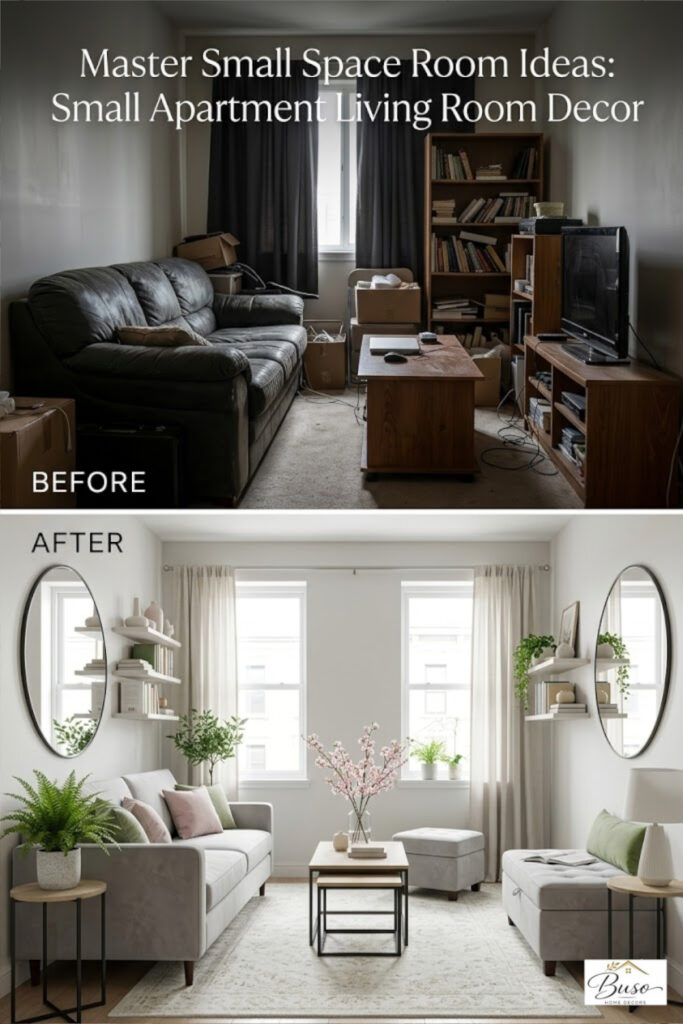
In this guide, we are going to walk you through a complete before-and-after blueprint designed to elevate your living area. By shifting from aimless decorating to systematic spatial planning, you will unlock the hidden potential of your home. Get ready to transform your living room from a crowded storage locker into a breathtaking lounge that feels both expansive and intimately comforting.
The Psychology of Small Spaces: From Cramped to Cozy
The way we arrange our living environments has a profound impact on our mental well-being. A disorganized, cluttered room can elevate cortisol levels and induce a subtle, constant state of stress. Conversely, a thoughtfully organized layout fosters a sense of calm, focus, and safety. When we look at the transition from ‘before’ to ‘after’ in small apartments, the shift is not merely aesthetic—it is psychological.
Implementing the right Small Space Room Ideas can change your mental state from feeling trapped to feeling deeply nurtured. To achieve this, we must reframe how we view limitations. Instead of focusing on what your living room lacks in square footage, focus on the intimacy and warmth that only a compact room can provide. Large, cavernous spaces often feel cold and sterile; small rooms, when styled correctly, naturally invite conversation and relaxation.
The first step in this psychological shift is establishing visual order. This does not mean you must purge all your belongings, but it does mean every item must have a designated home. When the human eye scans a room, it registers every individual object. If your gaze is constantly interrupted by scattered items, the room feels busy and small. By curating your surfaces and selecting the best room ideas that prioritize hidden storage, you allow the eye to glide smoothly across the space, creating an immediate, subconscious sense of openness and serenity.
The Before & After Blueprint: Layout Restructuring
The ‘before’ state of most small living rooms is defined by one common mistake: pushing all the furniture flat against the walls. While this seems intuitive—as if you are leaving the center of the room open—it actually highlights the room’s boundaries and makes it feel like a box. Additionally, it leaves an awkward, unusable dead zone in the middle of the carpet.
The ‘after’ blueprint completely rejects this old school of thought. Instead of lining the perimeter, try ‘floating’ your furniture. Pulling your sofa even just a few inches away from the wall creates an illusion of depth, suggesting that the room continues beyond the physical boundaries of the furniture. If space permits, place your seating area in the center, anchored by a cohesive area rug. This defines the living zone clearly and allows for natural traffic paths around the perimeter.
Consider how you move through the space. A successful layout ensures that traffic flows effortlessly without anyone having to dodge sharp corners or squeeze past coffee tables. Utilizing beautiful room ideas like circular coffee tables or rounded armchairs can soften the pathways and prevent the layout from feeling rigid. Remember to zone your apartment. If your living room also functions as a home office, use a slender console table or a lightweight bookshelf as a room divider to separate your work life from your relaxation zone. By physically and visually segmenting these activities, you make a single room feel like a multi-room suite.
Smart Furniture Selection: Multifunctional Masterpieces
In a compact living room, every single piece of furniture must earn its keep. There is simply no room for single-purpose items that take up valuable floor space without offering additional utility. The ‘before’ phase of a cluttered room often features bulky, heavy sofas, static coffee tables, and cabinets that offer minimal storage.
To execute this transition successfully, finding versatile Small Space Room Ideas that prioritize dual-purpose furniture is key. Think of your furniture as an active toolkit for daily living. A classic example is the storage ottoman. It serves as a footrest, extra seating for guests, a coffee table when topped with a sturdy tray, and a hidden chest to stash blankets, board games, or seasonal pillows. Similarly, nesting tables are perfect room ideas for tight quarters because they can be tucked away when not in use and expanded when hosting.
Scale and proportion are equally critical during your furniture hunt. Instead of choosing a massive, overstuffed three-seater couch, opt for a sleek, apartment-sized sofa with clean lines and exposed legs. Furniture that sits up off the floor on tapered wooden or metal legs allows light to pass underneath, making the entire room feel lighter and airier. If you need a workspace, look for a wall-mounted drop-front secretary desk that can be closed up at the end of the day, hiding your laptop and papers from view and restoring the room’s relaxing atmosphere.
Color Palettes and Lighting Tricks to Expand Your Horizon
Color and light are the ultimate illusionists in interior design. A dark, poorly lit room will always feel smaller than it actually is, while a bright, cohesive space stretches the boundaries of our perception. The ‘before’ room is often plagued by mismatched, high-contrast color schemes and a single, harsh overhead light fixture that casts deep, gloomy shadows in the corners.
Our ‘after’ blueprint leverages monochromatic or closely related color palettes to unify the environment. When walls, trim, and large furniture pieces share similar tones—such as soft creams, warm grays, or muted sages—the visual boundaries of the room melt away. The eye doesn’t jump from one contrasting block to another; instead, it experiences a seamless flow of color. You can still incorporate bold hues, but do so through easily changeable accents like throw pillows, artwork, or small ceramic pieces.
When it comes to lighting, rely on a layered approach rather than a single source. Combine ambient lighting from a flush-mount ceiling fixture, task lighting from a sleek reading lamp, and accent lighting from warm LED strip lights tucked behind bookshelves or under cabinets. This variety eliminates shadows and draws the eye to different corners, making the room feel wider. Additionally, positioning a large mirror directly opposite a window is one of the best room ideas to double the natural light entering your apartment, instantly bouncing sunshine deep into the room.
The Finishing Touches: Decorating Without Cluttering
The final phase of our blueprint involves the art of curation. A common misconception is that small spaces should have no decor at all. This approach often leads to clinical, uninviting rooms that lack personality. The key is not to eliminate decor, but to edit it ruthlessly and display it with intention.
In the ‘before’ scenario, we often see dozens of small knick-knacks scattered across every available surface. This micro-clutter fragments your vision. In the ‘after’ scenario, replace these scattered items with a few larger, statement-making pieces. For example, instead of a gallery wall with twelve small, mismatched frames, opt for one large, striking piece of canvas art. This creates a singular focal point, giving the room a sense of grandeur and scale.
To bring warmth to your design without physical clutter, rely heavily on texture. Mix a chunky knit throw blanket with a smooth leather armchair, a velvet accent cushion, and a rustic woven jute rug. These rich tactile variations add immense depth and visual interest, making the space feel incredibly cozy and layered. By implementing these perfect room ideas, your small apartment living room will not look like a compromise—it will look like a masterclass in high-end, intentional design.
Frequently Asked Questions
How do I choose the right size rug for a small living room?
A common mistake is buying a rug that is too small, which makes the room look like a postage stamp. Choose a larger rug that allows at least the front legs of all major furniture pieces (sofa, chairs) to rest comfortably on top of it. This anchors the seating zone and creates a unified, expansive foundation.
Can I use dark paint colors in a small space?
Absolutely! While light colors make a room feel bright and airy, deep, dark paint colors (like charcoal, navy, or forest green) can create a dramatic, cozy ‘jewel box’ effect. Dark colors blur the corners of a room because there is less contrast between walls, making the boundaries hard to define. Just ensure you have plenty of warm, layered lighting to balance the deep tones.
What is the best way to hide cords and electronics in a small apartment?
Clutter from electronics is a major spatial drain. Use wall-mounted cord covers painted the same color as your walls, or utilize media consoles with built-in cord management holes. For streaming devices and modems, tuck them into decorative baskets with open weaves that allow ventilation while completely concealing the plastic hardware.
Final Thoughts
Transforming a small apartment living room is entirely achievable when you shift your mindset from limitation to curation. By employing strategic layouts, selecting multifunctional furniture, utilizing light and color to your advantage, and curating your decor with precise intent, you can easily turn a cramped layout into a cozy, functional masterpiece.
Remember that great design is an ongoing journey. Do not feel pressured to execute all these changes overnight. Start by floating your existing sofa or clearing off a single cluttered surface, and observe how the energy of your room shifts. Over time, as you apply these beautiful room ideas, your apartment will start to feel less like a box of constraints and more like a carefully crafted haven. Embrace the unique charm of your small space, trust the blueprint, and enjoy the beautiful, expansive home you deserve.
📌 Found this helpful? Save this pin to your Pinterest boards so you can refer back to it later!