
Disclosure: This post contains affiliate links. If you purchase through these links, I may earn a small commission at no extra cost to you. Thank you for supporting my blog! 💕
Bohemian interior design has always been celebrated for its carefree, expressive, and deeply personal aesthetic. At the heart of this global style lies a dedication to comfort, history, and, most importantly, texture. While minimalist designs prioritize clean lines and smooth, sterile surfaces, bohemian spaces thrive on the chaotic harmony of tactile diversity. Among the most effective ways to introduce this tactile richness into your living space is through the artful arrangement of woven wall hangings. Rather than treating wall art as a flat, two-dimensional afterthought, bohemian design encourages you to treat your walls as a dynamic canvas for fiber arts.
When we think of wall decor, our minds often drift to framed prints or paintings. However, there is an inherent warmth in woven textiles that canvas simply cannot replicate. Soft wools, rough jute, twisted cotton, and intricate knots create a playground for light and shadow, transforming static walls into cozy, breathing elements of the home. By learning the secret to layering these elements, you can elevate your space from simple bohemian-inspired to a professionally curated sanctuary. Embracing bohemian design means allowing yourself to play with forms, and curating spaces with boho knit decors provides an organic, tactile foundation that instantly softens the hard angles of modern architecture.
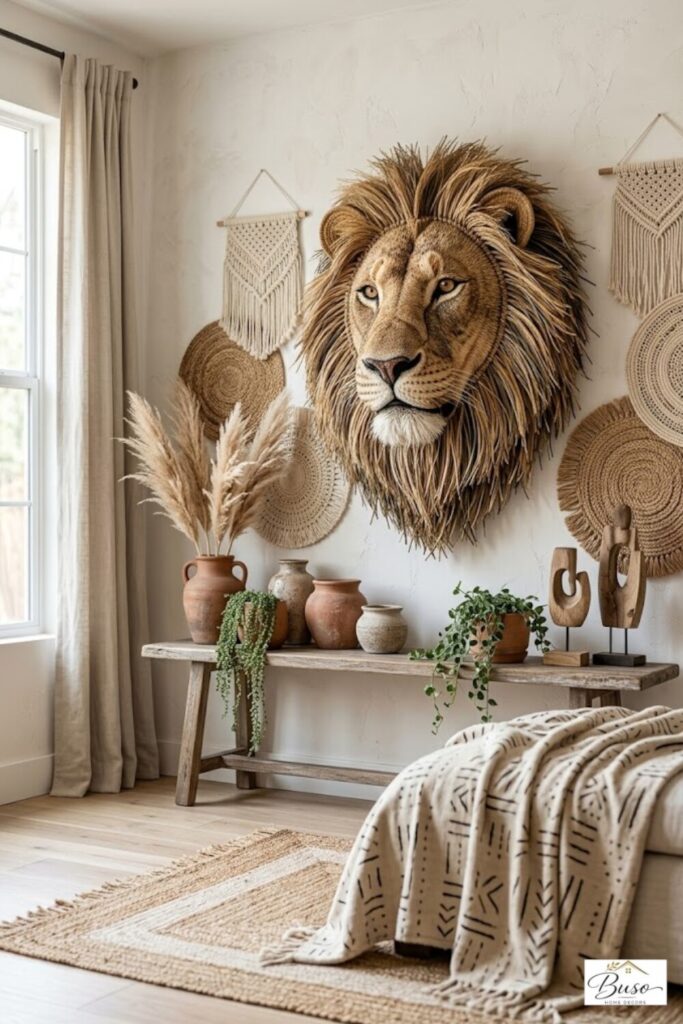
Understanding the Core of Bohemian Texture-Play
To successfully layer textures, one must first understand the fundamental philosophy behind bohemian texture-play. In a bohemian space, texture functions in the same way color does in a traditional interior; it establishes depth, guides the eye, and evokes emotion. Without contrasting textures, a room styled in neutral tones can easily feel flat, cold, and uninviting. By mixing coarse fibers with soft, plush weaves, you introduce a sensory complexity that invites touch and creates visual warmth.
When selecting pieces for your wall, look for items that tell a story through their construction. Think of chunky wool roving, delicate macramé knots, raw wooden beads, and frayed cotton tassels. Beautiful knit decors bring this artisanal, handmade charm into the modern home, bridging the gap between historical craft and contemporary styling. The goal is to build a tactile landscape where each piece complements rather than competes with the next. This requires a mindful balance between dense, heavy weaves and light, airy open-knots. By focusing on how different fibers catch the light throughout the day, you can create a shifting, living exhibition on your living room or bedroom walls.
Selecting the Perfect Anchor for Your Wall Display
Every great masterpiece requires a solid foundation, and a layered wall display is no different. Your base layer acts as the anchor for the entire arrangement, establishing the boundary and scale of your installation. When selecting the perfect anchor for your wall display, you generally want to choose a piece that is larger, flatter, and more structurally sound than the items that will sit on top of it. A wide, flat-weave tapestry, a large woven grass mat, or a substantial macramé backdrop with a clean, linear silhouette makes an excellent starting point.
Using a flat-weave base prevents the overall composition from looking overly bulky or chaotic. It provides a visual grounding effect, allowing the eye to rest before moving on to more intricate details. Once this structural anchor is securely mounted, you can begin to identify the best knit decors to overlay. These primary layering pieces should offer a contrast in both color and fiber weight. For instance, if your base layer is a smooth, tan jute mat, your secondary layer could be a plush cream-colored wool hanging with high-pile details. This contrast in density is what creates the illusion of three-dimensional depth, transforming a flat wall into a captivating sculptural feature.
The Art of Overlapping: Depth, Dimension, and Scale
The true magic of textile styling lies in the art of overlapping. Many people make the mistake of hanging their woven decorations side-by-side in a neat, orderly row. While this symmetrical approach works well for minimalist gallery walls, it robs bohemian decor of its organic, lived-in charm. Instead, the secret is to stagger, tilt, and partially obscure pieces to mimic the natural layers found in the wild.
To master this technique, begin by hanging your largest anchor piece slightly off-center. Next, suspend your secondary piece so that it overlaps the base layer by at least one-third of its width. This overlapping technique draws the eye inward and creates an intriguing sense of mystery. Integrating versatile boho knit decors along with varying hanger lengths allows you to control the vertical flow of the arrangement. Use wooden dowels, organic driftwood branches, or even brass rings to suspend different layers at alternating heights. By allowing the tassels of a top layer to casually drape over the dense weave of the layer underneath, you create a cascading effect that feels effortless, spontaneous, and beautifully complex.
Color Palettes that Elevate Layered Textile Displays
While texture is the primary driver of bohemian design, color plays an indispensable supporting role in uniting layered textiles. Without a cohesive color palette, a heavily layered wall can quickly devolve into visual noise. To avoid this, successful designers rely on a carefully curated color scheme that relies on tonal variations rather than high-contrast clashes. Monochromatic schemes, such as varying shades of cream, beige, sand, and taupe, work exceptionally well because they allow the physical textures of the fibers to take center stage.
If you prefer a richer aesthetic, earthy tones like terracotta, mustard yellow, sage green, and rust can be integrated to add warmth and depth. When choosing these knit decors, try to select pieces that share at least one common color thread. For example, if your base layer features a subtle rust-colored border, select a smaller overlay piece that incorporates that same rust tone within its fringe or main body. This subtle repetition creates a visual bridge across the different layers, guiding the viewer’s gaze smoothly from one element to the next without feeling abrupt or disjointed.
Combining Fibers with Wood, Brass, and Dried Florals
To take your textured wall display to the next level, you must think beyond yarn and wool. While textiles form the soul of the arrangement, combining them with hard, organic mediums creates a delightful tension that enhances the beauty of both materials. Incorporating elements like raw wood, polished brass, dried botanicals, and earthenware pottery prevents your display from looking too soft or uniform.
Consider hanging a small, hand-carved wooden mask or a polished brass crescent moon directly over a soft fiber tapestry. The reflective quality of the metal and the matte finish of the wood offer a stunning contrast to the light-absorbing qualities of woven cotton. Furthermore, incorporating authentic boho knit decors beside geometric wicker baskets or trailing eucalyptus vines adds an organic, fresh element to the composition. The key is to find perfect knit decors that feature built-in loops or pockets where you can easily tuck in air plants, dried pampas grass, or preserved palm leaves, seamlessly blending the natural world with handmade artistry.
A Step-by-Step Guide to Curating Your Boho Accent Wall
Ready to transform your home? Follow this simple, actionable step-by-step guide to curating your own custom boho accent wall. First, gather all your potential pieces and lay them out on the floor directly below the wall you plan to decorate. This floor rehearsal allows you to experiment with different arrangements, overlapping techniques, and color balances without putting unnecessary holes in your drywall.
Begin your layout by placing your largest, flattest piece in the center or slightly off-center as your anchor. Next, place your medium-sized, high-texture pieces, such as beautiful knit decors, on top of the base layer, shifting them slightly to the left or right to create asymmetry. Once you are happy with the foundational layers, add your smallest accent pieces, such as brass charms, dried floral bundles, or mini macramé hangings, to fill in any awkward gaps. Take a photo of the layout from above to refer to as you transition the pieces from the floor to the wall. When hanging, start from the back layer and work your way forward, adjusting tension and height as you go to ensure a balanced, eye-catching masterpiece.
Frequently Asked Questions
How do I clean and maintain woven wall decorations?
To keep your woven hangings looking fresh, gently shake them outside once a month to remove dust. For deeper cleaning, use a vacuum attachment on low suction or spot clean with a damp cloth and mild soap. Avoid soaking fiber art to prevent shrinkage or color bleeding.
Can I layer woven decor in a small room without making it feel cluttered?
Yes! In smaller spaces, stick to a neutral, monochromatic color palette. This keeps the visual weight low while still providing the cozy benefits of texture. Keep the scale of your layers proportional to your wall size.
What is the best way to hang heavy fiber art without damaging my walls?
For lighter pieces, adhesive hooks work well. For heavier woven tapestries, use a sturdy wooden dowel supported by anchored wall hooks. This distributes the weight evenly and prevents drooping.
Final Thoughts
Mastering the art of layering textures with bohemian woven wall decorations is a journey of self-expression and creative play. By looking past flat, conventional wall art and embracing the tactile warmth of fiber crafts, you can infuse your living spaces with character, soul, and a comforting sense of depth. Whether you start small with a couple of overlapping pieces or commit to a full-scale textured gallery wall, the secret lies in balance, organic asymmetry, and the thoughtful combination of diverse materials. As you experiment with these knit decors, trust your intuition, embrace imperfections, and enjoy the process of turning your walls into a rich, three-dimensional narrative of your personal style.
📌 Found this helpful? Save this pin to your Pinterest boards so you can refer back to it later!