
Disclosure: This post contains affiliate links. If you purchase through these links, I may earn a small commission at no extra cost to you. Thank you for supporting my blog! 💕
Modern architecture is undergoing a quiet, green revolution. As urban living spaces become more compact and our collective desire for nature grows, interior designers are finding ingenious ways to merge structure with biology. One of the most breathtaking trends emerging at this intersection is the integration of advanced horticultural systems into architectural focal points. Specifically, merging a hydroponic indoor garden with the sweeping, organic lines of a modern curved staircase is redefining the concept of vertical greenery.
Historically, staircases were viewed merely as functional conduits between floors, often leaving the void beneath them underutilized or relegated to dark storage closets. However, a curved staircase represents movement, flow, and elegance. By wrapping a living, breathing agricultural system around or underneath these structural spirals, homeowners can create a beautiful indoor garden that acts as both a visual centerpiece and a source of fresh, hyper-local produce. This marriage of form and function elevates the home from a simple shelter to a dynamic, self-sustaining ecosystem.
Implementing these systems within the complex geometries of curved staircases requires a sophisticated understanding of both structural engineering and hydroponic science. Unlike flat-wall vertical gardens, curved installations present unique challenges in light distribution, irrigation routing, and microclimate management. In this comprehensive guide, we will explore the critical design principles, technological integrations, and plant selections necessary to master these jaw-dropping architectural statements.
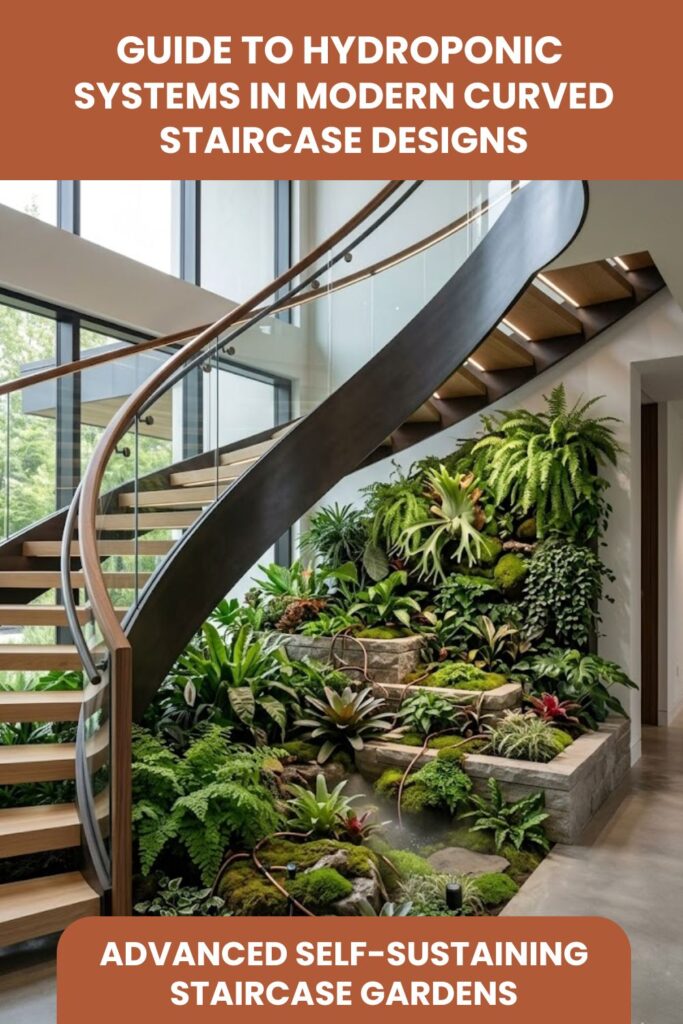
The Architecture of Curves: Why Staircases are Ideal for Hydroponics
The sweeping geometry of a helical or curved staircase offers an unprecedented architectural canvas. Traditional linear staircases create sharp angles and dark, triangular voids underneath that are notoriously difficult to design around. In contrast, the fluid, organic curvature of a spiral staircase naturally guides the human eye, making it the perfect architectural frame for living art. Incorporating soil-free agricultural systems along this curve capitalizes on these natural sightlines, transforming a transitional zone into a destination.
From a structural perspective, curved staircases inherently create complex vertical columns of space. This verticality is ideal for hydroponic systems, which thrive on vertical stackability. Instead of consuming valuable horizontal floor space, a vertical hydroponic system utilizes the rising airspace of the stairwell, allowing for a highly dense planting area. This architectural synergy makes it the best indoor garden choice for space-conscious urban dwellers who refuse to compromise on design or ecological footprint. The rising air currents within a stairwell also assist in natural air circulation, a crucial factor in preventing mold and encouraging strong plant stems.
Furthermore, curved staircases are often positioned near architectural glazing, such as double-height windows or skylights, to maximize natural light penetration. This abundant ambient light can be strategically channeled to supplement the artificial grow lights required for indoor cultivation. By positioning plants along the outer sweep of the stairs, you create a dynamic, multi-layered green tapestry that shifts in perspective as you ascend or descend, offering a fully immersive biophilic experience that standard wall-mounted planters simply cannot replicate.
Choosing the Right Hydroponic Subsystem for Curved Structures
To successfully implement a hydroponic indoor garden within a curved staircase, selecting the appropriate watering and nutrient delivery method is paramount. Not all hydroponic systems are created equal, especially when confronted with the unique, sweeping inclines of curved architecture. Standard, rigid Nutrient Film Technique (NFT) channels, for instance, are notoriously difficult to adapt to curved radiuses without custom thermoforming or 3D-printing. Therefore, designers must look to more flexible, modular solutions to achieve a seamless fit.
Modular drip irrigation systems and flexible aeroponics stand out as the premier choices for these complex layouts. A drip system utilizes flexible tubing that can easily follow the exact contour of a staircase’s underbelly or outer banister. By housing individual plant pods in custom-molded, curved vertical towers or cascading wall pockets, nutrient-rich water can be pumped to the top of the curve and allowed to trickle down through gravity, ensuring efficient water use without the risk of stagnant pooling. This approach allows you to build a perfect indoor garden that is both highly efficient and visually streamlined.
Aeroponics, while technically more complex due to high-pressure misting nozzles, offers the advantage of being incredibly lightweight. Because plants are suspended in air and misted at regular intervals, there is no need for heavy volumes of standing water within the vertical structure itself. This significantly reduces the structural load on the staircase, which is a vital consideration when retrofitting older homes or working with cantilevered, floating stair designs. Whichever subsystem you choose, incorporating smart sensors to monitor pH, electrical conductivity (EC), and water temperature is essential to keep the delicate biological loop running flawlessly.
Lighting and Environmental Controls in Stairwell Microclimates
One of the most common pitfalls when designing indoor agricultural elements is underestimating the light requirements of photosynthetic organisms. While a stairwell might feel bright to human eyes, plants require specific wavelengths and photon densities that typical residential lighting cannot provide. Integrating professional-grade LED grow lights into a curved architectural feature requires a delicate balance between industrial design and botanical necessity.
To maintain the clean aesthetics of a modern staircase, grow lights should be recessed or hidden within the underside of the treads, or integrated directly into a custom-designed curved handrail. Flexible, high-output LED strips with full-spectrum capabilities can be installed along the curvature, casting a warm, natural glow downward onto the plants while shielding the eyes of stair users from direct glare. When selecting these components, choosing fixtures with high Color Rendering Index (CRI) values ensures that the foliage looks vibrantly green and natural, rather than washed out under clinical purple light.
Beyond lighting, managing the microclimate within a stairwell is critical. Warm air naturally rises, creating a temperature gradient between the bottom landing and the top landing of the staircase. This stack effect can lead to localized heat buildup, which can stress sensitive leafy greens or herbs. Incorporating silent, low-voltage fans hidden behind the foliage helps equalize the temperature and ensures constant air movement. This movement mimics natural breezes, strengthening plant cell walls and preventing the damp, stagnant conditions that invite pests. By planning for these environmental variables from the outset, you can ensure that these indoor garden installations remain lush, productive, and free from common indoor horticultural diseases year-round.
Structural Integration: Load-Bearing, Waterproofing, and Maintenance Access
Integrating a fully functional hydroponic indoor garden into a curved staircase is not merely a botanical challenge; it is a serious structural engineering endeavor. Water is heavy, weighing approximately 8.34 pounds per gallon. When designing a vertical growing wall or cascading planter system that wraps around a staircase, the dead load of the water, growing media, and mature plant mass must be calculated and factored into the staircase’s structural capacity, especially for floating or suspended stair designs.
In addition to load-bearing considerations, absolute waterproofing is non-negotiable. Modern curved staircases are frequently constructed using premium materials such as solid hardwoods, architectural concrete, or powder-coated steel. Chronic exposure to high humidity, water splashes, or slow leaks can ruin expensive wood treads, cause concrete to spall, or trigger rapid oxidation in steel. To mitigate this, a robust, multi-layered waterproofing barrier must be installed behind the growing structure. Utilizing marine-grade fiberglass backing panels, liquid rubber membranes, and drip trays with integrated overflow drains ensures that the structural integrity of the home is never compromised.
Finally, never design a system that cannot be easily maintained. Plants require regular harvesting, pruning, and occasional pest management. If a homeowner has to balance precariously on a curved banister or use an unstable ladder over a flight of stairs to reach a suffering Swiss chard plant, the design has failed. Incorporating sliding tracks, swing-out panels, or modular planter cassettes that can be easily reached from the safety of the stair treads ensures that maintaining your green wall is a joyful, safe experience rather than a hazardous chore.
Plant Selection and Aesthetic Composition for Vertical Spirals
The ultimate success of your staircase garden lies in the curated selection of flora. Because a curved staircase is a dynamic, three-dimensional element viewed from multiple angles, the spatial composition of the plants should match the movement of the architecture. Rather than planting a uniform wall of a single species, designers should use variations in texture, color, and growth habit to emphasize the sweeping curves of the structure.
Leafy greens and culinary herbs are the classic choice for a functional hydroponic indoor garden. Varieties of loose-leaf lettuce, like oakleaf or butterhead, offer soft, ruffled textures that contrast beautifully with the sharp, clean lines of modern stairs. Herbs like cascading rosemary, creeping thyme, and trailing mint can be positioned along the edges of the planters, allowing them to spill over the sides and soften the architectural boundaries. For a splash of color, incorporating edible flowers such as nasturtiums or violas adds vibrant focal points that mimic the scattering of wildflowers along a hillside path.
When arranging the plants, consider the natural light and temperature gradients of the stairwell. Place heat-tolerant, light-loving plants like basil or cherry tomatoes near the top of the staircase, where temperatures are warmer and ambient light from skylights is strongest. Conversely, shade-tolerant leafy greens like spinach, kale, and Swiss chard should occupy the lower, cooler tiers of the system. This zoning not only ensures optimal plant health but also creates a beautiful visual transition from deep, robust greens at the base to delicate, airy textures at the summit, mimicking a natural mountain ecosystem.
Smart Automation and Low-Maintenance Upkeep
To truly master the modern staircase garden, integrating smart automation is the key to transitioning from a demanding chore to an effortless luxury. Modern IoT (Internet of Things) devices have revolutionized home agriculture, allowing you to monitor and adjust your system’s parameters directly from a smartphone. Automated nutrient dosers can analyze the water chemistry in real-time, injecting precise amounts of nitrogen, phosphorus, and potassium to maintain perfect growing conditions without manual calculations.
Furthermore, automated flush-and-fill cycles can be programmed to periodically refresh the reservoir water, minimizing salt buildup and preventing root rot. When these high-tech systems are integrated directly into the home’s automation hub, the staircase garden becomes a self-regulating piece of living furniture. Low-water sensors can send push notifications, and integrated cameras can track plant growth patterns, alerting you to potential pest infestations before they spread. This level of control ensures your beautiful indoor garden remains flawless with minimal physical intervention.
Frequently Asked Questions
How do you calculate and manage the water weight of a staircase hydroponic system?
Managing water weight requires calculating the total volume of water in the system’s reservoirs, pipes, and growing medium (approximately 8.34 lbs per gallon). For curved staircases, we recommend using a split-system design where the heavy primary reservoir is located on the ground floor beneath the staircase, and lightweight high-pressure aeroponic or drip lines pump water upward, minimizing dead load on the floating elements of the stairs.
Can I grow root vegetables under a curved staircase?
Generally, hydroponic staircase systems are optimized for shallow-rooted plants like leafy greens, culinary herbs, and small fruiting plants (like strawberries or dwarf tomatoes). Deep root vegetables like carrots or potatoes require specialized deep-water culture or substrate beds that are structurally too heavy and bulky for the delicate aesthetics and weight limits of curved staircase designs.
What is the best way to prevent water damage to wood or metal staircases?
Absolute protection is achieved by installing a multi-layered containment barrier. This includes using a marine-grade fiberglass backing panel behind the growing towers, sealing all nearby structural surfaces with liquid-applied rubber waterproofing membranes, and integrating high-sided stainless steel drip trays with a dedicated gravity drain line connected directly to your home’s wastewater system.
Final Thoughts
Integrating a sophisticated hydroponic indoor garden within the elegant curves of a modern staircase is more than just a bold design statement; it is a harmonious convergence of nature, technology, and architectural ingenuity. By understanding the structural demands of weight and waterproofing, selecting the ideal flexible hydroponic subsystems, and engineering precise lighting and ventilation controls, you can transform a simple transit zone into a breathtaking, living ecosystem.
As urban architecture continues to evolve towards sustainability and wellness-focused design, features like staircase gardens will shift from high-end luxuries to essential elements of biophilic living. This integration not only purifies the indoor air and provides a continuous harvest of fresh, pesticide-free greens, but it also provides a profound psychological connection to the natural world. Elevating your home with a curved staircase garden is the ultimate way to master modern, sustainable interior design, proving that even the most complex architectural spaces can flourish with life.
📌 Found this helpful? Save this pin to your Pinterest boards so you can refer back to it later!